What an Executive Personal Brand Is Actually Made Of
Ask ten executives what their personal brand is and most will describe their job. That is a record, not a brand.
A personal brand is the answer to a question nobody asks you directly: why you, and why now. In practice it is what a chair says to the rest of the board after your name comes up — one or two sentences, usually without you in the room. If those sentences are just your last title, you do not have a brand yet.
Six things make one up.

Origin story
Not where you grew up. Where the work came from.
Most executives worth appointing have a reason they do this rather than something else, and it is rarely the reason on the CV. It tends to be specific and early — an industry they watched fail, a business their family ran, a first job that showed them how badly something was being done.
It matters because it is the one part of your brand nobody can copy and nobody can argue with. Two candidates can both have run a $300 million division. Only one of them can say why they were the person who took it on.
Most people have never put theirs into words. That is not a memory problem — nobody has ever asked for it in a form that survives being repeated by someone else.
Vision
What you are trying to build, stated so that it is larger than the next role.
A vision is not a career goal. “A CEO seat within three years” tells a board what you want from them. A vision tells them what you would do with it — and boards appoint people who arrive with a view about where the business should go, not people who arrive with ambitions.
The test is whether it would still be true in a different job. If it disappears when the role changes, it was a plan.
Values
What you will not trade.
The most abused word in this vocabulary, and most of what is published about it is worthless because it lists virtues. Integrity, excellence, collaboration — nobody claims the opposite, so the words carry no information.
Values are not observed until they are tested. A crisis. A decision with no good option. A business you had to close, a partnership you had to end, a person you had to move on. That is where they become visible — to you as much as to anyone reading about you. Until then they are aspirations, and everybody’s aspirations look alike.
They matter more at board level than anywhere else, because much of what a board does is decide how much of something to accept. People need to know where you stop.
Positioning
What you are offering, and to whom.
The component most often got wrong by being too broad. “Senior executive with cross-functional experience” is positioning for nobody: the market does not search for it and no chair repeats it.
Three situations account for most of this work — a step up from general management into an executive seat, a first move toward a board appointment, and a repositioning after a change of direction. Each needs a different answer to the same question, and that answer determines everything written afterwards.
Proof
The evidence that stops the rest being assertion.
Everything above is a claim until something checkable sits under it: a named market, a figure with a date, a system replaced, a regulator dealt with, a business wound up. In a market as small as Australia’s, claims that cannot be checked are not neutral. They are the reason a call goes to someone else.
The standard is specific enough to be wrong. If your proof could have been written by any executive in your sector, it is not proof.
Voice and presentation
How you sound, and what people see.
The smallest component, and the one most often mistaken for the whole thing. The headshot, the profile, the way you write, the way you are in a room. It does matter — but it is the surface of the other five rather than a substitute for them, and a polished presentation of nothing is transparent. Fastest of all to the people you most want to impress.
What it is all for
Nobody builds a personal brand to be admired. At this level you build one so that when your name comes up in a room you are not in, the person who raises it has something specific and true to say.
That is the whole objective: six components, one sentence somebody else can repeat.
Working out what yours actually are is the hard part, and it is harder about yourself than about anyone else. It is what a branding session is for.

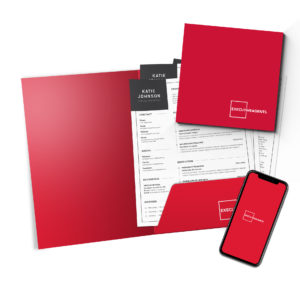

Struggling with defining your own personal brand?
Let us do the work for you! Get the Executive Success Package.
Perfect for people who want powerful personal branding combined with an impeccable CV, LinkedIn profile, and covering letter for powerful job applications.



Kim Blinkhorn
7 months ago
I can highly recommend the professional services offered by Executive Agents. From the first encounter with the MD, I was given expert advice and through a collaborative approach - I was able to achieve exactly what I had hoped to. I would especially like to thank Kate Williams who was able to capture a long career and capabilities in a concise yet meaningful manner.

K Pereira
1 year ago
After a long career in a senior leadership role, I knew I had the experience for my next step, but I struggled to put it all down on paper in a way that truly did it justice. My self-confidence can have its ups and downs, and I knew I needed a professional to help me tell my story.
The whole branding process was fantastic and genuinely thought-provoking. The initial session was far more than a simple CV discussion, it was a deep dive into my career that helped me see the value of my own achievements in a new light. The team is incredibly skilled at asking the right questions and, more importantly, at listening. I was amazed at how well they captured my voice and my career. The final documents - CV and the candidate statement - were simply outstanding. They made me look great, and I am now moving forward with my application with a renewed sense of confidence. For any senior leader who needs help telling their own story, I cannot recommend this agency highly enough, the service and the result were exceptional!

Jhonatan Espinoza
1 year ago
Exceptional service that delivers real results
I first worked with Executive Agents back in 2021 and they were instrumental in helping me secure an excellent role that ultimately led to my promotion to the C-suite. Their understanding of the executive market and ability to match candidates with the right opportunities is outstanding.
I recently engaged them again for a CV update and I'm thoroughly impressed with the outcome. They have a keen eye for presenting executive experience in a compelling way that really showcases your value proposition. The team is professional, responsive, and clearly knows what works in today's competitive market.
If you're looking for recruitment specialists who genuinely understand executive-level placements and can help advance your career, I highly recommend Executive Agents. They've been a key part of my professional journey and I wouldn't hesitate to work with them again.

Jackson Devine
1 year ago
**★★★★★ 5/5 stars**
Was really struggling with my resume for ages. Kept putting off job applications because I knew it wasn’t good enough but didn’t know how to fix it. Tried using AI to help write it which seemed like a good idea at the time but honestly wasn’t confident it was actually any good.
Eventually found Executive Agents online and decided to give them a go. Really glad I did! They knew exactly what was wrong with what I had and how to make it better. The person I worked with was lovely and explained everything properly without making me feel dumb.
My new resume looks so much more professional now and has all the right information that employers are looking for apparently. Already got a couple of interviews lined up which is more than I had before!
Should have done this months ago instead of stressing about it. If your resume isn’t working for you definitely recommend these guys. Made the whole process much easier and now I actually feel confident sending it out.

Riley Lane
1 year ago
Used Executive Agents for their branding service during my job hunt and it made a real difference. They helped me figure out how to present myself better to employers and made my LinkedIn and resume much stronger.
The team knew the Melbourne market well and gave practical advice on what recruiters actually look for. Instead of just generic tips, they tailored everything to my specific situation and the roles I was going after.
Been getting more interview calls since working with them. Worth the investment if you’re struggling to get noticed by employers.

Nickolas Vokolos
2 years ago
I have to say I am very happy with the outcome and the way the initial interview was undertaken, and the way that Kate worked though the process keeping me informed on the way. Kate has been great to deal with and have appreciated her insights and feedback. So overall very happy with the outcome and I have fed this back to the executive recruiter as well.

Bryan Swanson
2 years ago
It was lovely meeting you last week and after our conversation, I was confident that I have found the right team to support and lead my business towards a brighter future.

Josh Andersen
3 years ago
I wanted to drop a quick note to say thank you for your support...I thought you'd like to know I was successful in my application and am now the new Vice President of our Australian division. I am absolutely delighted, have been to Japan twice already and am loving the new opportunities that this role is presenting me with. Thanks once again for the professionalism and support you showed me.




Stewart Fischer
3 years ago
I wanted to drop a quick note to say thank you for your support...I thought you'd like to know I was successful in my application and am now the new Vice President of (----) Group Australia. I am absolutely delighted, have been to Japan twice already and am loving the new opportunities that this role is presenting me with. Thanks once again for the professionalism and support you showed me.

James Elphingstone
3 years ago
I’ve always got jobs through my networks and internal promotions. I’ve never had to prepare a resume and selection criteria statement before. The team helped me develop a high quality, great looking cover letter. My LinkedIn looks great and I'm getting invited to interviews.

Charles
3 years ago
I can't say enough good things about Executive Agents. From the moment I got in touch, they offered incredible service. I worked with Kate and Nick on my resume and had two mock interview training sessions. Their support was instrumental in landing the position I wanted. The mock interviews were a game-changer, and I can't recommend them enough. Thanks, Kate & Nick!


Starc
3 years ago
I reached out to them, they promptly responded to my inquiry and helped me fast-track my resume and cover letter for a position that I initially thought was out of my league. Anna, the expert I had the pleasure of working with, was an absolute delight.

Quynhanh Phan
3 years ago
I Recently had the pleasure of working with Executive Agents and I can't express enough how incredible my experience was. Right from the moment I reached out to them, their service was outstanding. Kate and Nick were the dynamic duo behind my resume and mock interview training, and I have to say, their expertise was truly instrumental in helping me secure the job I had my heart set on. The mock interview session they conducted were nothing short of a game-changer. i came out of them feeling more confident and prepared than ever before. I wholeheartedly recommend Executive Agents, and a big thanks to Kate and Nick for thier invaluable assistance!

izhar MaZaRi
3 years ago
Working with Tracy and the Executive Agents team to create my management consultant resume was a fantastic experience. Their professionalism, industry knowledge, and exceptional service were impressive from start to finish. I'm grateful for the resume they crafted, which I believe will open doors to new opportunities. Highly satisfied!



Natalie Long
3 years ago
Executive Agents offer an incredible service right from the first contact. I engaged with them for resume development, and followed through with two mock interview training sessions. My experience with Executive Agents resulted in me being successful for the position I was applying for. I really could not have obtained this position without their coaching and support. I particularly found the mock interview sessions incredibly helpful and imperative to putting my best foot forward. I would hands down recommend them to anyone - especially Kate & Nick. Thank you!!!

Alice Rae
3 years ago
Wonderful detailed team that have helped me so much to update me CV and Linked In to present my self in the best possible way.
Would highly recommend.

John MacLean
3 years ago
Fantastic service. Very prompt, professional, and you can tell they take great pride in their work. I'd definitely use their services again.

Thomas Foo
3 years ago
I recently had the pleasure of working with Tracy and the team at Executive Agents to have my management consultant resume prepared, and I couldn't be more impressed with the exceptional service they provided. From start to finish, they displayed professionalism, expertise, and a deep understanding of the industry. I am extremely grateful for their support in crafting a resume that will undoubtedly open doors to new opportunities.

Ann Verdolini
3 years ago
From start to finish, the team at Executive Agents was dedicated to ensuring that my resume accurately reflected my skills and experience, and positioned me as a top candidate for the jobs I was interested in. Their personalized approach, exceptional writing quality and outstanding results make them a truly top-notch service.

Chris Serfontein
4 years ago
Very happy with the services received from Executive Agents. All required services was done within the promised timelines witch helped me land my dream job. I highly recommend using Nicholas and his team to give you the edge over other candidates!

Helen Ward
4 years ago
Executive agents were professional with their expert process and the outcome exceeded my expectations and gave me confidence to pursue worthwhile and rewarding work that ulilizes my strengths and enables me to reach my career and life goals. The branding experience and process was a significant aspect of the process. In a nutshell I am gifting this service to my daughter and husband in the future. This might be the best review, when you want loved ones to have access to the remarkable assistance you have had in securing work you love. Thankyou

Michael Ward
4 years ago
My experience with Executive Agents has been exceptional. They are very responsive and the standard of the cover letters and CV updates and have given me the best opportunity to secure the roles I have applied for. I highly recommend Executive Agents and will continue to use their services for future roles I apply.

Fiona O'Donnell
4 years ago
Executive agents was fantastic. They responded to my inquiry within minutes and fast tracked my resume and cover letter for a position that I thought was likely out of my reach. Anna was great to work with and was able to help me find examples within my experience. She produced a highly professional cover letter and I was offered an interview. I was so happy to get to interview stage and thanks to what was written for me I felt confident. I was offered the role the next day and am so glad I decided to work with professionals. Thanks EA
Credentials